


Paris Miniature
Have fun with the first ever 3D interactive model of Paris! 150 touch slides and 3 touch screens help you to locate most monuments and places of interest on the 6 Sq.m model of Paris.
Parc Astérix
If you'd like to visit a French-themed park, there's nothing better than a visit to Parc Astérix. Based on the famous characters from the Astérix and Obelix books, a visit to this park is bound to be plenty of fun and a chance to give your pupils a taste of French culture.
Tour Montparnasse
A chance to admire the city's attractions from a considerably more modern tower than the Eiffel Tower. Go up in the lift to the 56th floor, day or night, and be amazed by the spectacular views you will see. This is a good activity to do of an evening to keep the pupils occupied
Grévin
See waxwork statues of some of France's most important people and events over the centuries - from the burning of Jeanne d'Arc to the murder of Henri IV. An excellent way to bring history alive and allow pupils to become more familiar with the history of France.
Musée des Egouts


The visit to Paris' sewers is a unique experience and is bound to intrigue your pupils. The sewage system was started back in 1370, when the first sewer was built by Hudgues Aubritot. On your visit, you will see the development of the system from the 14th century to the present day. The museum is located in a part of the enormous network of sewers and visitors see what happens to the water under the surface of the ground and learn about the role of the sewer workers. (Closed on Thursdays and Fridays and for a fortnight every January.)
Cité des Sciences et de l'Industrie


Where better to take schoolchildren to learn about science and have fun at the same time? Parts of the exhibition are aimed at those with a very basic science knowledge while others are for students of specific scientific subjects. The central part of the exhibition, Centra, is for those with a basic knowledge of science. Exhibitions are temporary and change regularly. Contact us for more information about what's on there at the moment. The newly-renovated planetarium is a fantastic opportunity to see the stars as you travel from planet to planet and explore space. This is an interesting and attractive way of introducing science to young people. There is a room available where groups can eat their picnic lunches.
As well as the exhibitions, the centre also houses specialist cinemas where you can appreciate films in a different environment.
Batobus
A convenient way of travelling between some of Paris' attractions such as the Eiffel Tower, the Musée d'Orsay, the Louvre and Notre-Dame is to catch a boat travelling down the Seine. These boats are a public transport service, rather than a service specifically for tourists, so there is no commentary for the attractions you pass. But this is a convenient and fun way of travelling from one attraction to another. A single trip ticket is available or you can also buy a day-long ticket so that you can jump on and off as you wish.
Montmartre and the Sacré Coeur


Where better to bring your pupils for a true taste of the city's atmosphere than the area of Montmartre and the Place du Tertre outside the famous Sacré Coeur church? Admire the fantastic views of the city from the square, which is always buzzing with all the artists and musicians there, not to mention all the street vendors selling all kinds of Parisian souvenirs! The beautiful Sacré Coeur church was built in the 19th century and the highest point of its dome is the second highest point in Paris after the Eiffel Tower!
Centre Pompidou


The Centre Pompidou is a celebration of contemporary art, theatre, literature, music and cinema. The cultural institution was the idea of President Georges Pompidou, who wanted a centre to celebrate modern and contemporary creation of all kinds. The building itself is an example of contemporary architecture and was designed by architects Renzo Piano and Richard Rogers. Following extensive renovations, the centre re-opened to the public on 1 January 2000 and has since become one of the most visited attractions in France with around six million people passing through its doors every year. As well as visiting the exhibitions inside the building, the piazza outside is a great place for people-watching as you eat your lunch. The nearby fountain complete with colourful water features is a must for any trip to Paris, and is bound to capture anyone's imagination.
The centre houses one of the most important museums in the world which features one of the best collections of modern and contemporary art in Europe. There is also a cinema and a musical research centre as well as an area dedicated to educational activities. Whatever your interest in the creative sector, there is bound to be something for you here.
Boat trip on the Seine
What better way to appreciate the city of Paris than from a boat cruise down the Seine? See some of the city's most well-known sights, including the Eiffel Tower, the Louvre and Notre-Dame Cathedral, all from the comfort of your seat. Multilingual commentary is included in most trips. Departure points include Le Pont Neuf, Eiffel Tower and Pont de L'Alma.
Disneyland® Resort Paris
A visit to Disneyland® Resort Paris is a fantastic way to combine fun with education. Disney has developed three education workbooks covering a range of subjects which can be downloaded from the new website www.disneylandparis4schools.com. The workbooks are aimed at supporting the National Curriculum for England and Wales at KS3, but can be adapted for younger students. As well as seeing the magical world of Disney come alive in the parades and attractions of Disneyland® Park, groups can also include the Walt Disney Studios® Park in their visit, where visitors go behind the scenes to see how special effects for famous TV, film and animated features are created. Complete the adventure by finishing your day with Buffalo Bill's Wild West Show.
You can either visit with a one or two-day Disney Park Hopper Ticket and enjoy both the Disneyland Park and the Walt Disney Studios Park on the same day, or stay for two days and visit each park on a different day.
Please contact us for more information on ticket prices, shows and supporting educational materials.
Eiffel Tower
The Eiffel Tower may well be the most well-known tower in the world, but it never loses its appeal or popularity for visitors to Paris. It was originally built in 1889 for the Exposition Universelle, to celebrate the centenary of the Revolution. It was 320m (1050feet) high, and was the highest building in the world before the Chrysler Building was erected in New York. The city's literary and artistic elite was opposed to the tower at first, and it was nearly demolished in 1909. But it proved to be a very useful place for all the antennae needed for new technological advancements and so was left in place. If you're feeling particularly energetic, you can climb the stairs to the second floor, or you can take the lift to the top. If you want to walk halfway, you will have to join the lift on the second floor to reach the top.
Notre-Dame de Paris
The Cathédrale de Notre Dame is at the heart of Paris, in the true meaning of the word. The cathedral is situated right in the centre of the city, on the island of l'Ile de la Cité. It has also been the focus of Parisian Catholic life for seven centuries. Other churches stood on the same site before work began on the present one in 1163. The building work was completed in the 14th century. The cathedral is a wonderful example of French Gothic architecture. It can hold up to 6,000 people and its magnificent rose windows are well worth a visit.
Musée d'Orsay
Since 1986, this art museum has been home to a large collection of works from the 19th century, as well as France's biggest collection of avant-garde art from the early 20th century. Here, you can see some of the most well-known Impressionist works, including Renoir's portrait of Montmartre and The Siesta by Van Gogh. The museum is considerably smaller than the Louvre and it is maybe a bit easier to navigate your way around the buildings and the collection of works. Originally built as a railway station, the building stopped being used for this purpose during the Second World War and was used as a mailing centre and as a set for several films, including the film adaptation of Kafka's The Trial. It was finally decided to turn the building into an art museum in the late 1970s, and the impressive architecture provides a stunning backdrop to the works of the masters.
The Louvre Museum
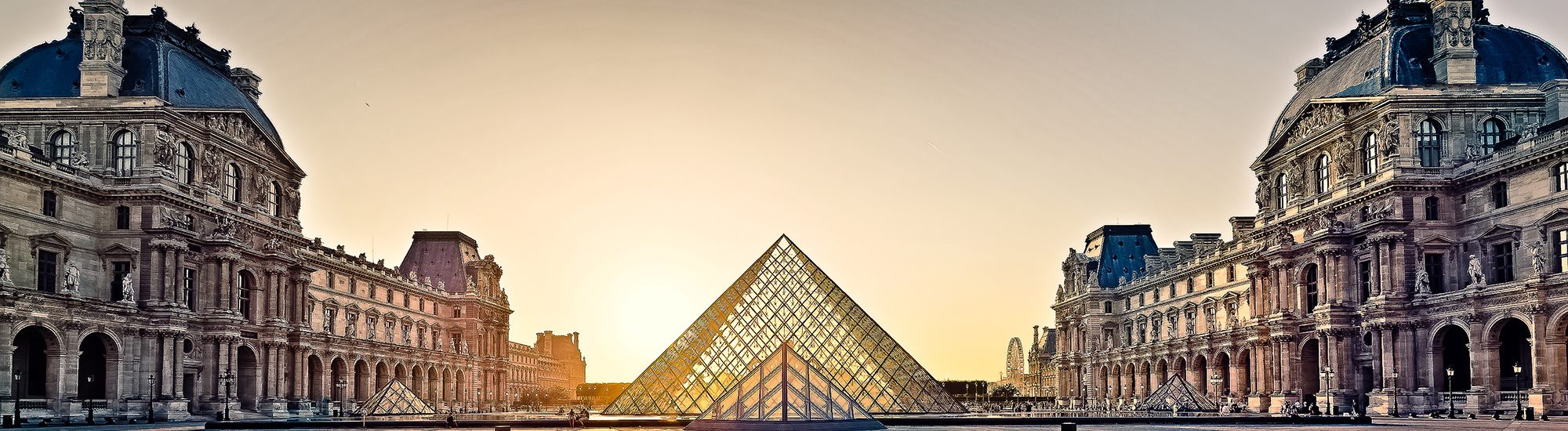
The Louvre is one of Paris' most famous museums. Known as the museum which houses one of the world's most famous paintings, the Mona Lisa, the Louvre has also enjoyed a great deal of attention recently due to its link with the popular work of fiction, The Da Vinci Code. A special trail has even been devised for those wishing to see the works featured in the book and film. A total of 35,000 works are housed in the museum displayed in 60,000 metres square of exhibition space. A guided tour will help you focus on the works or periods which most interest you and give you the most out of your visit.
